
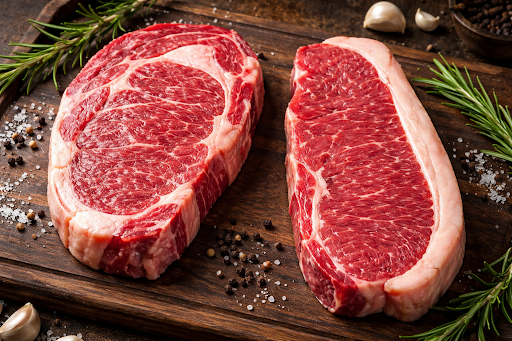
Choosing the right steak can feel overwhelming, especially when two popular cuts look similar at the butcher counter. The debate over rib eye steak vs striploin is common among home cooks and steak lovers. Both cuts are tender, flavorful, and ideal for grilling, but they offer very different eating experiences.
In this detailed guide, we will break down everything you need to know — from tenderness and flavor to fat content, cooking methods, nutrition, and price. By the end, you will know exactly which steak suits your taste and cooking style.
What Is Rib Eye Steak?
The Ribeye steak comes from the rib section of the cow, specifically ribs six through twelve. This area does very little work, which makes the meat naturally tender.
Marbling and Texture
Ribeye is famous for its heavy marbling. Marbling refers to thin streaks of fat that run through the meat. When cooked, this fat melts and keeps the steak juicy and soft.
The texture is tender and rich. Many people describe ribeye as buttery because the melted fat adds smoothness to every bite.
Flavor Profile
Ribeye delivers bold, rich flavor. The higher fat content enhances taste and creates a juicy finish. If you enjoy a steak that feels indulgent and full-bodied, ribeye is often the top choice.
What Is Striploin Steak?
The Striploin comes from the short loin section of the cow. In the United States, it is widely known as the New York strip steak.
This cut is slightly leaner than ribeye but still offers good tenderness.
Structure and Fat Distribution
Unlike ribeye, striploin does not have fat spread throughout the meat. Instead, it usually has a strip of fat along one edge. This gives it a cleaner look and firmer texture.
Flavor Profile
Striploin has a strong, beef-forward flavor. It is less rich than ribeye but still satisfying. If you prefer a steak that tastes meaty without too much fat, striploin is a strong option.
Rib Eye Steak vs Striploin: Main Differences
Tenderness
Ribeye is generally more tender because of its higher marbling. The fat melts during cooking and keeps the steak moist.
Striploin is tender as well, but it has a firmer bite. Some people prefer this slightly chewy texture because it feels more substantial.
Fat Content
Ribeye contains more intramuscular fat. This makes it juicier but also higher in calories.
Striploin has less internal fat, which makes it leaner and slightly healthier in terms of fat intake.
Texture
Ribeye feels soft and rich.
Striploin feels firm and structured.
The difference is noticeable when chewing, especially if both steaks are cooked to the same temperature.
Flavor Intensity
Ribeye offers deep, buttery richness.
Striploin offers bold, clean beef flavor.
Neither is better than the other. It depends on what you enjoy most in a steak.
Nutritional Comparison
While both cuts are excellent sources of protein, iron, and essential vitamins, their fat levels differ.
Ribeye:
- Higher in total fat
- Higher in saturated fat
- Slightly more calories
Striploin:
- Lower fat content
- Fewer calories
- High protein with a leaner profile
If you are watching calorie intake or trying to reduce fat consumption, striploin may fit your diet better. However, ribeye provides more flavor per bite due to its fat content.
Cooking Methods: Which Cut Performs Better?
Grilling
Both cuts work well on a grill.
Ribeye performs especially well over high heat because the fat protects the meat from drying out. It develops a beautiful crust while staying juicy inside.
Striploin also grills nicely, but it requires closer attention. Because it has less marbling, overcooking can make it tough.
Pan Searing
Ribeye is ideal for cast iron cooking. The rendered fat helps create a crisp, golden crust.
Striploin can also be pan-seared successfully. Adding butter during cooking can help enhance moisture and flavor.
Broiling and Reverse Searing
Both steaks respond well to reverse searing. This method involves cooking the steak slowly at low temperature first, then finishing with high heat to form a crust.
Because ribeye has more fat, it tends to stay juicy even with longer cooking times.
Price Differences
In most markets, ribeye is slightly more expensive than striploin. The reason is simple: ribeye is highly popular and considered a premium cut due to its tenderness and rich flavor.
Striploin is usually more affordable while still offering excellent quality. It is often seen as a balanced choice between cost and flavor.
Prices vary depending on the beef grade, such as Prime or Choice, and your location.
Which Steak Is Better for Beginners?
If you are new to cooking steak at home, ribeye may be more forgiving. The higher fat content helps prevent dryness, even if you slightly overcook it.
Striploin requires more careful timing. Cooking it beyond medium can make it firmer and less juicy.
For beginners who want consistent results, ribeye is often easier to master.
Which Steak Is Better for Special Occasions?
Ribeye is often chosen for celebrations or restaurant-style dinners because of its rich taste and impressive presentation.
Striploin is a great option for people who prefer a cleaner flavor or want something less heavy but still premium.
Both cuts can feel luxurious when cooked properly.
Common Mistakes to Avoid
No matter which steak you choose, avoid these common errors:
Do not cook straight from the refrigerator. Let the steak rest at room temperature for about 30 minutes before cooking.
Do not skip resting time after cooking. Allowing the steak to rest for five to ten minutes helps juices redistribute.
Do not overcook. Use a meat thermometer for accuracy. Medium-rare is often considered ideal for both cuts.
How to Choose at the Butcher Counter
When comparing rib eye steak vs striploin in person, look for:
Bright red color.
Even thickness for consistent cooking.
Good marbling in ribeye.
A clean fat cap in striploin.
High-quality beef grade can also improve tenderness and flavor.
Final Verdict: Rib Eye Steak vs Striploin
So, which one should you choose?
If you love rich, juicy, and tender steak with plenty of flavor, ribeye is likely your best option.
If you prefer a leaner cut with a firm bite and bold beef taste, striploin is an excellent choice.
The real winner depends on your personal taste, cooking style, and dietary preference.
Both cuts are premium, both are delicious, and both can deliver a restaurant-quality meal when prepared correctly. Understanding their differences simply helps you make a smarter choice for your next steak dinner.