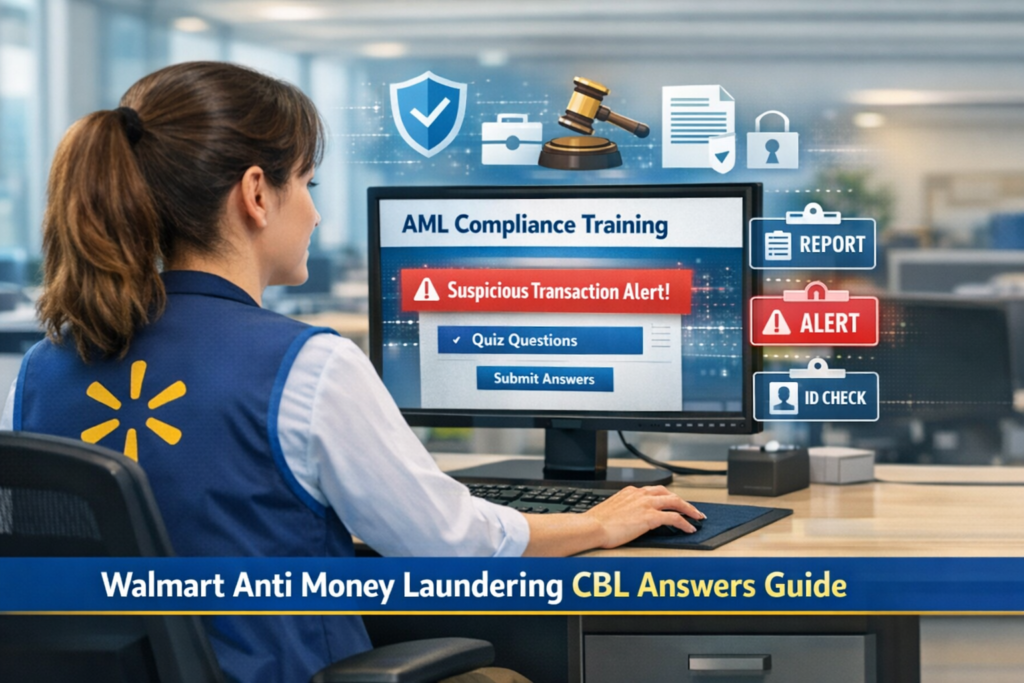
Walmart is one of the largest retailers in the world, handling millions of transactions every day. To ensure compliance with financial laws and prevent criminal activity, Walmart requires all employees to complete Anti-Money Laundering (AML) Computer-Based Learning (CBL) training. Many associates search for “Walmart Anti Money Laundering CBL Answers” to understand the training and pass their quizzes effectively. This guide provides a detailed overview of the training, key concepts, and tips to succeed while keeping the information informative and safe.
What Is Walmart Anti Money Laundering CBL Training?
The Anti-Money Laundering CBL training is a mandatory online course designed to educate Walmart associates about recognizing and preventing money laundering. Money laundering is the process of disguising illegally obtained money as legitimate by moving it through financial transactions or businesses.
Walmart’s AML CBL training helps employees:
- Identify suspicious activities in financial transactions
- Understand the risks associated with money laundering
- Follow proper reporting procedures for suspicious transactions
- Comply with legal and corporate regulations
This training not only protects Walmart from legal penalties but also ensures the safety of customers and the integrity of its financial operations.
Why Walmart Requires AML Training
Retail businesses handle significant volumes of cash and transactions daily. Large retailers, including Walmart, are attractive targets for money launderers due to the scale of their operations. Money laundering through retail businesses can include activities such as:
- Structuring cash deposits to avoid reporting limits
- Purchasing large quantities of gift cards with cash
- Making suspicious refunds or exchanges
- Conducting transactions without proper identification
AML training equips employees to detect these warning signs and take appropriate action. Without proper training, employees may unknowingly facilitate illegal financial activities, putting both the store and themselves at risk.
Key Concepts Covered in Walmart AML CBL
The training is structured around several core concepts that every associate should understand.
Understanding Money Laundering
Money laundering involves three primary stages:
- Placement – Introducing illegally obtained money into the financial system, often through small deposits or purchases.
- Layering – Moving money through multiple transactions or accounts to conceal its source.
- Integration – Using the funds in legitimate ways so that they appear lawful.
Recognizing these stages helps employees understand how criminals attempt to hide illicit funds in retail environments.
Recognizing Suspicious Activity
Employees must be vigilant for behaviors or transactions that may indicate money laundering, such as:
- Multiple small cash transactions from a single customer
- Avoidance of identification requirements
- Requests to split purchases to avoid limits
- Unusual patterns of gift card purchases
Understanding these red flags allows associates to take preventive action.
Reporting Suspicious Transactions
If an employee observes suspicious activity, it is crucial to follow Walmart’s reporting protocol:
- Continue normal customer service without confrontation
- Avoid making assumptions or accusations about the customer
- Notify the store’s compliance officer or supervisor immediately
- Submit any required reports according to Walmart’s AML procedures
Prompt reporting helps prevent criminal activity and ensures compliance with federal and corporate regulations.
Common Questions in Walmart AML CBL
Many associates search for Walmart Anti Money Laundering CBL Answers because they want guidance on the quiz portion of the training. Instead of memorizing answers, understanding the concepts is essential.
Typical questions often cover:
- Definitions of money laundering and its stages
- Examples of suspicious transactions
- Steps to take when suspicious activity is identified
- Proper reporting channels within Walmart
By focusing on comprehension rather than rote memorization, employees can confidently answer questions on the CBL quiz and apply the knowledge in real-life scenarios.
Tips to Successfully Complete Walmart AML CBL
To ensure a smooth experience and successful completion of the training:
- Pay attention to real-world examples of suspicious activity
- Take notes on key compliance procedures
- Review Walmart’s internal policies related to AML
- Focus on understanding the reasoning behind each scenario-based question
Scenario-based questions test your understanding of how to handle different situations rather than just recalling facts. Practical knowledge is more valuable than memorized answers.
The Importance of AML Compliance in Retail
Anti-money laundering compliance is not only a regulatory requirement but also a critical aspect of business integrity. Effective AML compliance benefits Walmart by:
- Preventing financial crimes and fraud
- Protecting customer trust and safety
- Ensuring compliance with federal and state laws
- Maintaining a strong corporate reputation
In today’s global retail environment, large retailers like Walmart must prioritize compliance to avoid legal risks and financial loss.
Understanding the Legal Implications
Failure to comply with AML laws can lead to serious consequences, including fines, legal action, and reputational damage. Walmart’s AML CBL training ensures that every employee knows their role in preventing illegal financial activities. Compliance also aligns with federal regulations, including the Bank Secrecy Act and other anti-money laundering statutes.
Frequently Asked Questions About Walmart AML CBL
Q1: Can I find the direct answers online?
While some sites claim to provide answers, it is recommended to study the concepts instead. Directly copying answers may violate Walmart policies.
Q2: How long does the training take?
Most associates can complete the AML CBL in 30–60 minutes, depending on familiarity with the content.
Q3: Are there assessments after the course?
Yes, the training includes scenario-based quizzes to test understanding of AML procedures.
Q4: What should I do if I encounter a suspicious transaction?
Follow the company’s reporting protocol without confronting the customer. Notify your supervisor or compliance officer immediately.
Conclusion
The Walmart Anti Money Laundering CBL Answers keyword reflects a common need among associates to complete their compliance training successfully. However, understanding the training’s concepts is far more important than memorizing answers. By learning how to identify suspicious activity, report incidents properly, and comply with AML regulations, Walmart employees not only pass their CBL quizzes but also contribute to a safer and more compliant workplace.
Proper AML knowledge protects the company, the employees, and the customers, ensuring that Walmart continues to operate with integrity and trust in the financial system.