Photojournalism editing is a vital part of visual storytelling in modern media. Whether you are a beginner photographer, a journalism student, or someone interested in the ethics and craft of news photography, understanding photojournalism editing will help you produce images that are both visually compelling and true to the moment. This article explores the essentials of photojournalism editing, including its purpose, techniques, workflow, tools, and ethical considerations. By the end, you will have a clear understanding of how editors shape powerful images while preserving their integrity.
What Is Photojournalism Editing?
Photojournalism editing refers to the process of selecting, adjusting, and preparing photographs for publication in news outlets, magazines, websites, and social media. Unlike artistic photography editing where creative freedom is encouraged, photojournalism editing must honor the authenticity of the scene. The goal is to enhance clarity and communication without misrepresenting reality.
In practice, editing in photojournalism includes choosing the strongest images from a shoot, correcting exposure and colors, cropping for better composition, and removing minor distractions. However, it strictly avoids manipulations that change the meaning or truth of what was captured.
Photojournalism editing bridges technical skill and ethical responsibility. Editors must decide what makes an image tell a story while respecting the subjects and facts.
Why Photojournalism Editing Matters
Photojournalism editing matters for several reasons. First, it improves the visual quality of photos so they communicate information effectively. Raw images straight from a camera often need adjustments to show important details clearly. Editing can correct lighting issues, enhance contrast, and improve focus where needed.
Second, editing helps guide viewer attention. A photo that is properly composed and exposed will naturally draw focus to the most important elements. In storytelling, this makes the narrative easier to understand.
Finally, photojournalism editing ensures consistency in visual presentation across a publication. When multiple photographs accompany a story, consistent tones and styles help readers connect information visually and intellectually.
Principles of Effective Photojournalism Editing
Accuracy and Truth
Above all, photojournalism editing must maintain the truth of the moment captured. This means avoiding changes that alter what actually happened. Editors should resist the temptation to add dramatic filters, remove significant elements, or manipulate content in a way that misleads viewers.
Clarity and Visibility
Images should be clear and easy to interpret. Adjustments for exposure, contrast, and sharpness should help viewers see subjects and context without confusion. Editing should reveal the story, not obscure it.
Composition and Focus
Good composition draws the viewer’s eye naturally. Editors can crop images to remove unnecessary background or distractions, ensuring the main subject stands out. Composition changes should respect the original context of the photograph.
Respect for Subjects
Photojournalism often covers sensitive topics, including conflict, tragedy, and personal struggle. Editors must treat subjects with dignity, avoiding manipulations that might exploit or sensationalize their images.
Key Steps in the Photojournalism Editing Workflow
Photojournalism editing follows a structured process that helps editors make consistent, ethical decisions. Below are key stages in a typical workflow.
Importing and Organizing
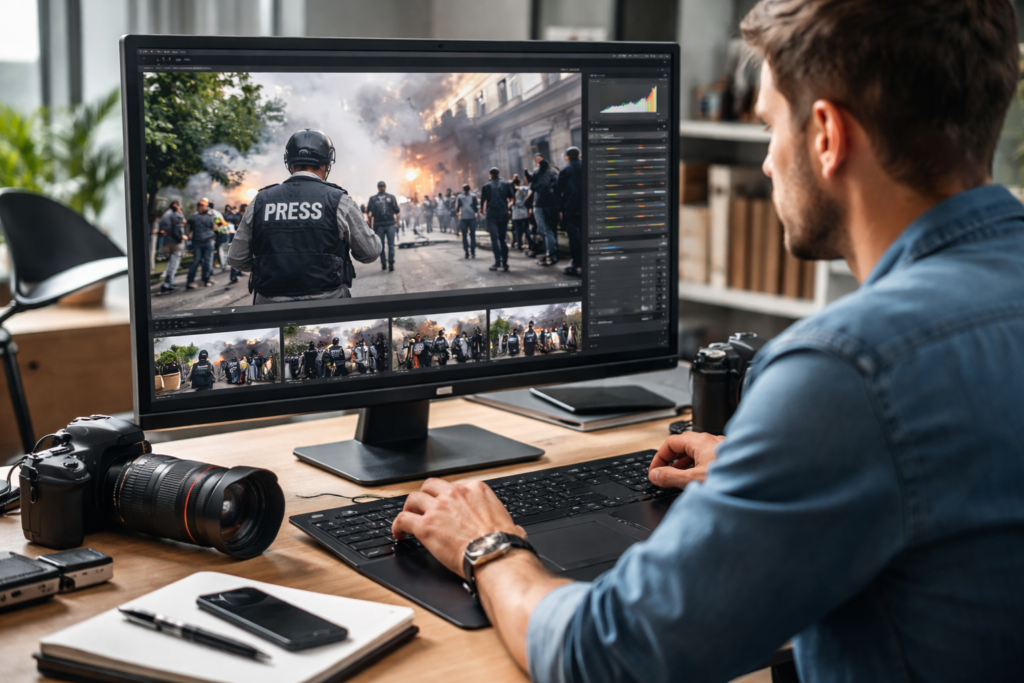
The first step is to import photos into editing software or a photo management tool. At this stage, editors review all images from a shoot and organize them with ratings, keywords, or labels. The purpose is to quickly identify potential selections for further editing.
Culling Images
Culling is the process of narrowing down a large set of photos to the strongest candidates. Editors look for images that accurately reflect the event, have technical quality (sharp focus, good exposure), and convey a clear visual narrative. During culling, similar shots are compared, and only the best ones are kept.
Basic Technical Adjustments
Once a selection is made, basic adjustments begin. These include:
- Exposure correction: Ensuring the image is not too dark or too bright.
- White balance adjustment: Making colors appear natural and accurate.
- Contrast and brightness: Enhancing tonal range to define subjects clearly.
- Sharpness and noise reduction: Clarifying details while reducing graininess.
These adjustments help produce images that are visually consistent and ready for publication.
Cropping and Framing
Cropping can improve the composition of a photo by changing the frame so the subject stands out. Editors use cropping to tighten framing, remove distracting edges, and improve the balance of visual elements. It is important to crop carefully and avoid removing context that is essential to the story.
Final Review and Export
In the final stage, editors review all selected images to ensure they meet editorial standards. They check for consistency in color and tone, correct metadata, and confirm that the images uphold ethical guidelines. Once approved, photos are exported in the appropriate format and resolution for publication.
Tools Used in Photojournalism Editing
Several tools are commonly used by photojournalists and editors to perform their work efficiently. The choice of software depends on individual preference, workflow needs, and publication requirements.
Adobe Lightroom
Adobe Lightroom is widely used for photo editing and organization. It offers powerful tools for color correction, exposure adjustment, and batch processing. Lightroom’s non-destructive editing means changes do not alter the original file, which is ideal for preserving source images.
Adobe Photoshop
Photoshop provides advanced editing capabilities, including precise retouching and detailed adjustments. While Photoshop should be used sparingly in photojournalism to avoid excessive manipulation, it is useful for tasks like dust removal, cropping, and minor clarity improvements.
Photo Mechanic
Photo Mechanic is a favorite among professional photojournalists for its speed in image culling and metadata management. It allows editors to quickly view and organize large volumes of photos, which is essential in fast-paced news environments.
Capture One
Capture One is another powerful tool for color grading and tethered shooting. Its advanced color control and editing features make it suitable for professionals who require precise adjustments.
Ethical Considerations in Photojournalism Editing
Ethics play a central role in photojournalism editing. The public relies on news photos to convey accurate information about real events. Any manipulation that misrepresents reality can harm credibility and mislead audiences.
One of the core ethical rules in photojournalism is to avoid altering content in a way that changes the meaning of an image. Removing or adding significant elements, cloning objects, or using dramatic filters that exaggerate a scene’s emotional tone is unethical.
Editors must also respect the dignity of subjects. When covering sensitive topics such as violence, injury, or personal loss, it is important to present images responsibly, avoiding sensationalism.
Transparency is another ethical practice. When adjustments are made, especially significant ones for clarity or context, editors should be able to explain their decisions. Many reputable news organizations have clear policies that guide editing practices and detail what adjustments are acceptable.
Common Mistakes in Photojournalism Editing
Even experienced editors can make mistakes if they do not follow proper standards. Some common errors include:
- Over-editing: Applying heavy filters or unrealistic adjustments that change the tone of a scene.
- Ignoring context: Cropping out background elements that provide important context for the story.
- Poor color balance: Allowing color casts that misrepresent the scene, especially in news photos where accurate representation is essential.
- Failure to preserve metadata: Removing timestamps, location data, or credits can undermine the credibility of an image.
Avoiding these mistakes helps preserve trust between the publication and its audience.
Best Practices for Photojournalism Editing
To maintain high standards, editors should follow best practices that balance clarity, truth, and impact.
- Use non-destructive editing tools: This preserves original images while allowing adjustments.
- Develop a consistent style: Apply similar editing standards across all photos in a story.
- Stick to ethical guidelines: Refer to established editorial policies from reputable news organizations.
- Review work with peers: Collaboration and second opinions can catch errors or ethical concerns.
Regular training and staying updated on industry standards also help editors stay effective and responsible.
Conclusion
Photojournalism editing is more than a technical process. It is a craft that requires careful judgment, ethical awareness, and a clear understanding of visual storytelling. Whether selecting the best images, adjusting visual elements for clarity, or preserving the truth of a moment, editors play a crucial role in how audiences experience news events.
By mastering the principles and practices outlined in this article, photographers and editors can ensure their work is both impactful and responsible. Photojournalism editing is not just about making photos look good—it is about honoring the integrity of the story and presenting it in the most honest and compelling way possible.