
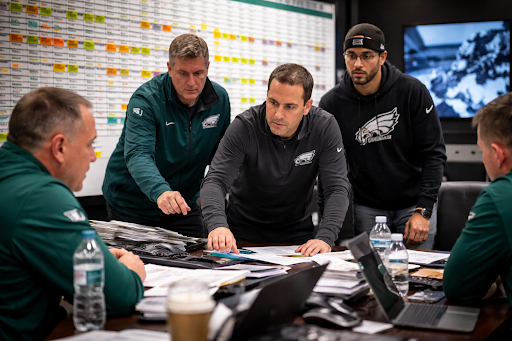
The phrase “Eagles rookie trade attempt” has been circulating more frequently in recent months among NFL analysts, draft experts, and Eagles fans. At its core, this phrase refers to any effort by the Philadelphia Eagles front office to engage in a trade involving draft picks and/or young players, particularly around roster building and the NFL Draft. While some chatter around this topic is rooted in real strategic discussions, other elements are based on speculation. In this article, we will explore what this phrase means, why it matters, how the Eagles operate in the trade market, and what implications such attempts could have for the team’s future.
The Eagles’ strategy in recent years has combined aggressive roster moves with a deep respect for draft capital. Understanding “Eagles rookie trade attempt” requires a look at both historical patterns and current offseason dynamics. This also includes how general manager Howie Roseman approaches trades involving rookies and young players as the team seeks to optimize its competitive window.
What Does “Eagles Rookie Trade Attempt” Mean?
In NFL terminology, a rookie trade attempt generally refers to a situation where a team tries to alter its draft position or roster by trading draft picks or young players. For the Eagles, this could mean several things:
- Trading draft picks to move up or down in the draft order and snag a highly valued rookie prospect before another team can.
- Swapping established players who are still on their rookie contracts for other assets.
- Exploring potential trades involving young players or developmental talent to fill roster needs.
In recent conversations online and in fan communities, the phrase “Eagles rookie trade attempt” has been used both to describe specific historical situations and to speculate about future moves. Some narratives even recount hypothetical trade efforts that never materialized, such as potential deals to draft certain prospects.
It’s important to clarify that not all references to a rookie trade attempt correspond to verified trade negotiations. Much of the recent talk in blogs and less-established sources echoes general assumptions about the Eagles’ behavior rather than reporting confirmed NFL trade talks.
How the Eagles Have Approached Trades Historically
The Eagles under general manager Howie Roseman have long embraced the idea of using trades as a tool to improve the team. Roseman is known league‑wide as one of the more active and creative executives when it comes to leveraging both draft capital and roster flexibility.
Notable Past Trade Moves
Recent seasons have seen the Eagles involved in several trades that reshaped their roster:
- Trading C.J. Gardner‑Johnson and a future pick for guard Kenyon Green and a mid‑round pick in 2025.
- Sending defensive end Bryce Huff to the San Francisco 49ers for a future conditional draft pick.
- Trading for quarterback Dorian Thompson‑Robinson from the Cleveland Browns while sending Kenny Pickett the other way.
- Acquiring cornerback Jakorian Bennett, a young player drafted by another team, in exchange for defensive tackle Thomas Booker.
These moves show the club’s willingness to swap talent and picks in multiple directions, often with an eye toward roster balance and future flexibility.
While these trades did not strictly involve draft day maneuvering to pick a specific rookie, they show that the Eagles are consistently evaluating young assets and ready to make moves that involve developing talent.
Why Trade Attempts Involving Rookies Matter
Trade attempts around rookies are often seen as a sign of strategic intent by a franchise. For the Eagles, these kinds of moves matter for several reasons:
1. Positioning for Priority Draft Targets
Teams often trade up to secure a higher‑valued prospect whom they believe can become a foundational player. For example, a team might move up in the first round if a standout quarterback, offensive lineman, or defensive star is unexpectedly still available late in the first round. Eagles leadership has demonstrated in the past a willingness to engage in such calls — or at least to be prepared to make them — though they do not always execute a trade during the draft. Decisions are based on board evaluations, team needs, and asset calculation.
2. Balancing Prospects and Experience
A rookie trade attempt can be part of a larger approach to balance immediate competitiveness and long‑term depth. The Eagles are often in a contention window, meaning they must carefully weigh giving up future capital for help now versus accumulating more rookies and developmental players for the future.
3. Managing Cap Space and Contracts
Sometimes, a trade involving a young player or draft pick can help with salary cap considerations. For example, trading a rookie on a cost‑controlled contract to acquire an established veteran or more favorable draft position can affect roster construction.
Current Rumors and Context in the 2026 Offseason
Heading into the 2026 NFL offseason, much of the trade speculation surrounding the Eagles has centered less on draft board maneuvering and more on roster player movement. One of the most significant stories involves star wide receiver A.J. Brown. Head coach Nick Sirianni recently stated he “cannot guarantee” Brown’s return for 2026 amid trade rumors, fueling market speculation about his future.
These discussions intersect with the idea of roster dynamics and draft planning. If the Eagles were to consider trading a high‑cap veteran like Brown — who has a monumental contract — the team could acquire significant draft capital or young players in return. That would, in turn, affect how they approach rookies in the draft.
Although these Brown talks are not strictly about a “rookie trade attempt,” they influence the overall context in which the Eagles manage their draft and developmental pipeline.
Other veteran players and contracts are occasionally mentioned in trade speculation, which could indirectly shape how the Eagles choose to position themselves around the draft.
Made‑Up vs. Confirmed Trade Talks
It’s worth noting that not every rumored trade attempt is backed by authoritative reporting. Some of the narratives online — especially in fan forums and smaller blogs — describe fictitious or speculative scenarios such as landing a specific draft prospect without giving up assets, which are not established as fact.
Confirmed trades reported by reputable sources for the Eagles in recent seasons have been recorded in official transaction logs and have been widely covered by outlets such as the NFL press and team releases. These provide the foundation for understanding how the Eagles actually maneuver in trades rather than simply speculate.
Strategic Considerations for the Eagles Going Forward
For the 2026 season and beyond, the Eagles will have multiple draft selections and key roster considerations to manage. Their approach to rookie trade attempts — whether involving draft positions or young players — will likely be influenced by:
Team Needs and Depth
Philadelphia’s roster depth at critical positions — quarterback, offensive line, wide receiver, and secondary — will shape whether the front office feels compelled to make aggressive moves to land an impact rookie or to stay patient and pick within their slots.
Salary Cap and Contract Management
How the Eagles handle big contracts and cap hits, especially with players like A.J. Brown, could determine how much draft capital they have available to trade or invest in young talent.
Draft Philosophy and Talent Evaluation
Howie Roseman and the Eagles scouting department will continue to assess whether certain prospects are worth trading up for or if they can get their desired players at the expected draft spots.
The phrase “Eagles rookie trade attempt” captures more than just a single transaction; it represents the active evaluation and strategic posture of a franchise that balances championship aspirations and long‑term viability.
Conclusion
The phrase “Eagles rookie trade attempt” has taken on various meanings in recent NFL conversations. While some references reflect speculative or less‑substantiated scenarios, the concept reflects a real strategic environment in which the Philadelphia Eagles operate. From active trade activity under Howie Roseman to significant roster discussions in the 2026 offseason, the team’s decisions around draft picks, young players, and potential trades remain central to their competitive strategy.
Understanding these dynamics — what counts as actual trade maneuvers vs. fan speculation — helps give Eagles supporters and NFL observers clearer insight into what this phrase truly encompasses.Ultimately, whether or not the Eagles make an actual rookie trade in the upcoming draft or continue to build through their existing picks, the phrase signifies a broader narrative about roster construction and the high stakes of NFL team building.