
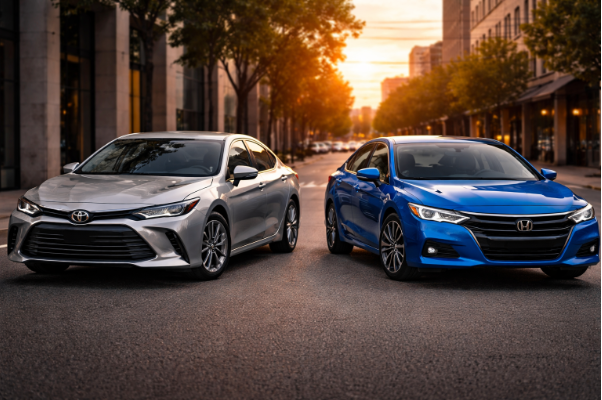
When choosing a new or used car, reliability is one of the most important factors for many buyers. Reliable vehicles can mean lower long‑term maintenance costs, fewer unexpected repairs, and a smoother ownership experience overall. Two Japanese automakers, Toyota and Honda, have long competed in this area, with each brand earning strong reputations for dependable cars. In this article, we explore Toyota vs Honda reliability in depth, helping you understand how these brands compare on durability, maintenance costs, model performance, and real‑world ownership experiences.
Why Reliability Matters
Reliability refers to how consistently a vehicle performs over time without experiencing issues that affect performance, safety, or comfort. A reliable car typically:
- Requires fewer repairs
- Has lower ownership costs
- Lasts longer with regular maintenance
Choosing a reliable vehicle can save money and stress over the years you own a car. Both Toyota and Honda are frequently praised for building dependable cars, but a closer look reveals some important differences.
Brand‑Level Reliability Rankings
Industry surveys and reliability reports help us compare brands objectively rather than relying solely on reputation. According to recent data from Consumer Reports, Toyota and Honda both rank among the most reliable mainstream car brands in the world. In the 2025 reliability survey, Toyota scored slightly higher than Honda, placing near the top of the rankings, while Honda remained a few positions behind but still well above many competitors.
These rankings consider issues reported by owners, major mechanical failures, and predicted reliability for the coming year. While exact scores vary by study and region, the pattern is consistent: both brands perform well, with Toyota usually holding a slight edge overall.
How Toyota and Honda Compare in Reliability Metrics
Long‑Term Ownership and Repair Costs
One way to measure reliability is to look at maintenance and repair costs over time. According to aggregated data on long‑term ownership expenses:
- Toyota vehicles average slightly higher annual maintenance costs than Hondas, but they tend to incur fewer severe repairs over the long term.
- Honda vehicles often have lower routine service costs, making them cheaper to maintain year by year, even if they might incur more repairs later on.
For example, some reliability comparisons show estimated 10‑year maintenance costs for Toyota to be lower overall than for Honda, even though yearly costs may be similar. This suggests that Toyota vehicles may incur fewer major issues as they age.
Engine and Powertrain Durability
Both brands have strong engineering backgrounds, but they approach powertrain design differently:
- Toyota emphasizes conservative engineering with proven naturally aspirated engines and durable hybrid systems. This approach focuses on longevity and proven technology rather than pushing performance boundaries. Hybrid powertrains, such as those found in the Prius, Corolla Hybrid, and RAV4 Hybrid, have built strong reliability records due to continuous refinement over many years.
- Honda is known for its well‑engineered engines and efficient designs, particularly with performance‑oriented technologies like VTEC. However, some Honda turbocharged engines and Continuously Variable Transmissions (CVTs) have shown a higher incidence of issues in the past, even though improvements have been made in recent model years.
These differences do not make one brand inherently unreliable; rather, they reflect diverging engineering philosophies.
Model‑Specific Reliability: Examples from Popular Vehicles
Reliability can vary significantly between specific models within each brand. A few examples illustrate how Toyota and Honda stack up at the model level:
Toyota Models
- Toyota Corolla – consistently scores well in reliability surveys and is known for low cost of ownership.
- Toyota RAV4 Hybrid – strong reliability ratings and efficient performance.
- Toyota Highlander – generally reliable SUV with proven durability.
Honda Models
- Honda Civic – often scores highly for reliability and remains popular due to its efficiency and longevity.
- Honda CR‑V – dependable SUV with solid performance.
- Honda Accord – well‑regarded midsize sedan with a good reliability reputation.
Some comparisons show that Toyota models such as the RAV4 Hybrid or Highlander receive slightly higher reliability scores than equivalent Honda models like the CR‑V or Pilot. However, Honda models frequently remain competitive and often offer value that appeals to many buyers.
Real‑World Ownership Experiences
Expert surveys provide a broad look at reliability trends, but real‑world owner experiences also help tell the story. Many drivers report Toyota and Honda vehicles lasting well past 200,000 miles with regular maintenance. Toyota’s history of reliable hybrid and internal combustion engines reinforces its reputation, while Hondas are praised for efficient power delivery and responsive handling even after many years.
While some reliability issues can occur with any brand, the overall picture for both Toyota and Honda is positive. Reliability anecdotes online and in owner forums often highlight low unexpected repair frequency and strong resale values, adding weight to industry survey data.
Maintenance, Warranty, and Service Network
Another factor that contributes to a brand’s perceived reliability is the availability of service and support. Both Toyota and Honda have extensive dealership networks in many countries, meaning owners have access to regular maintenance and genuine replacement parts. A strong service network can reduce downtime and help prevent minor issues from becoming serious problems.
Warranty coverage can vary by region and model year, but both brands typically offer competitive warranties that help protect owners in the early years of ownership. Extended warranties and service plans are also widely available.
Resale Value and Long‑Term Dependability
Reliability plays a major role in resale value. Vehicles that are known to be dependable often retain a higher percentage of their original value when sold or traded in. Toyota models, particularly the Corolla and Tacoma, are frequently noted for strong resale performance. Honda models like the Civic and Accord also retain value well, though typically slightly less than comparable Toyotas.
This trend underscores how long‑term dependability impacts total cost of ownership over the lifetime of the vehicle.
Summary: Toyota vs Honda Reliability
When comparing Toyota vs Honda reliability, both brands stand near the top of industry rankings and offer dependable vehicles that can serve drivers well for many years. The key takeaways include:
- Toyota often holds a slight edge in overall reliability across broader brand rankings, particularly in long‑term durability.
- Honda remains highly reliable, with some models matching or closely approaching Toyota’s performance.
- Maintenance costs and repair frequency are similar between the two brands, but long‑term severe repairs may be less common with Toyota.
- Model‑specific performance can vary, so individual research on a specific car is important even within a reliable brand.
Ultimately, the choice between Toyota and Honda may come down to personal preferences such as driving feel, technology features, or specific model needs. However, in terms of reliability alone, both brands are excellent choices, with Toyota generally having a slight advantage in broader industry data.